
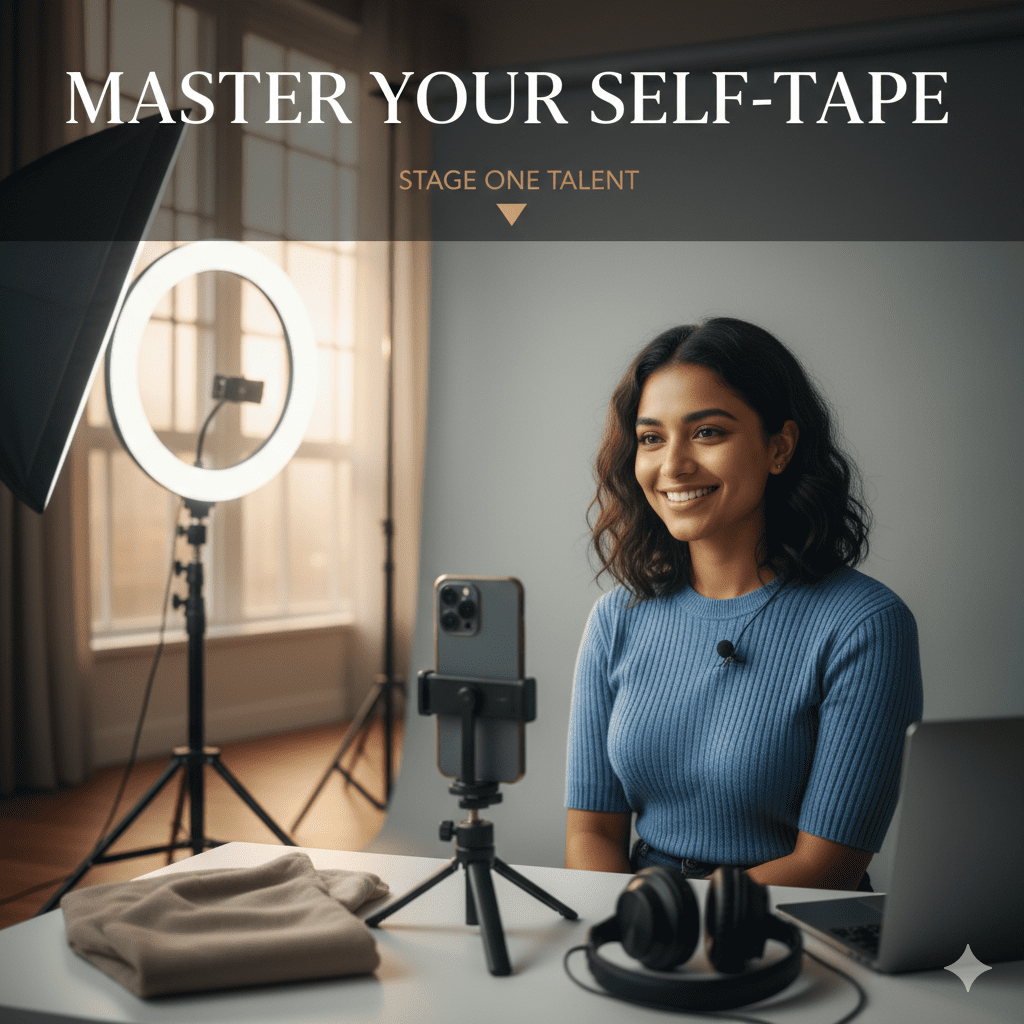
The Ultimate Self TapeGuide for Actors in 2026
Self Tape Guide For Actors In the modern entertainment landscape, the self-tape has replaced the traditional first-round audition. Whether you are auditioning for a West End stage production, a Netflix series, or a high-end commercial, your ability to deliver a high-quality digital performance is your most valuable asset. At Stage One Talent, we believe that technical barriers should never stand in the way of artistic talent. This guide is designed to help you turn any space into a professional casting suite.
Why Your Self-Tape Quality Matters for SEO and Success
When you submit a self-tape, you aren’t just showing your acting range; you are demonstrating your professionalism. A poorly lit, muffled video can distract a Casting Director (CD) from your performance. Conversely, a clean, well-framed tape allows the CD to focus entirely on your choices as an actor. For those looking for representation or work in London, Essex, and across the UK, staying “industry-standard” is non-negotiable.
1. The Technical Foundation: Lighting and Audio
The two biggest “tape-killers” are bad lighting and echoing audio. You don’t need an expensive DSLR; a modern smartphone is more than capable if you follow these rules:
Mastering the Light
- Natural Light is King: Position yourself directly facing a window. This provides a soft, even glow that fills in shadows.
- The Three-Point Setup: If you are filming at night or in a dark room, invest in a simple “Ring Light” or two soft-boxes. Place them at 45-degree angles to your face to avoid the “flat” look of a direct flash.
- Avoid Backlighting: Never have a window or a bright lamp behind you. This will turn you into a silhouette, and the casting team needs to see your eyes.
Crystal Clear Audio
- Dampen the Sound: If your room is “echoey,” hang blankets or towels out of frame to soak up the sound.
- Proximity: Ensure your phone is close enough to catch your voice. If you have a “reader” (someone saying the other lines), ask them to sit slightly behind the camera and speak at a lower volume so they don’t overpower your performance.
2. Setting the Stage: Background and Framing
Your background should be “invisible”—meaning it shouldn’t draw the eye away from you.
- The Neutral Wall: A solid, flat-colored wall in grey, blue, or off-white is perfect. Avoid busy wallpapers, posters, or family photos.
- Landscape Only: Always film in Landscape Mode (Horizontal). Vertical videos are for social media, not professional casting platforms like Spotlight.
- The “Medium Close-Up”: Frame yourself from the mid-chest to just above the top of your head. This allows the casting director to see your facial expressions and eye contact clearly.
3. The Performance: Eye Lines and “The Ident”
Self-taping is a different skill set than stage acting. It requires subtlety and intimacy.
- The Eye Line: Do not look directly into the camera lens unless the script explicitly tells you to break the “fourth wall.” Instead, pick a spot just to the left or right of the lens. This gives the illusion of talking to a real person.
- The “Ident” (Identification): Usually requested at the start or end of the tape. Keep it brief: “Hello, I’m [Your Name], I’m represented by Stage One Talent, and I am [Height] based in [Location].”
- The Slate/Full Body Shot: Sometimes CDs ask for a “slate” or a full-body shot. Simply step back or have someone tilt the camera down to show your full frame, then return to the close-up for the scene.
4. Editing and Sending Your File
Once you’ve captured the perfect take, the final step is delivery.
- File Naming: Never send a file called
IMG_4829.mov. Rename it to:[Full Name] - [Role] - [Project Name] - Stage One Talent. - Compression: High-quality video files can be huge. Use apps like “Handbrake” or “iMovie” to ensure the file is under 100MB without losing quality.
- WeTransfer/Vimeo: Use professional delivery methods. Avoid sending raw files via email as they often get blocked by high-security production servers.
Part 5: Professional Expectations & Agency Standards
At Stage One Talent, our reputation with casting directors is built on the professionalism of our roster. When you submit a tape through us, you are representing the agency. To maintain these high standards, we require all our talent to adhere to the following professional code:
The 24-Hour Communication Rule
In the fast-paced world of UK casting, opportunities can disappear in hours. We expect our talent to acknowledge “Pencils” (availability checks) and self-tape requests within 24 hours. Prompt communication allows us to secure your spot before the casting director moves on to the next candidate.
Exclusivity and Professionalism
Representation with Stage One is on an exclusive basis for the categories agreed upon. If you are contacted directly by a producer or casting director, you must refer them to the agency. This ensures that your fees, contracts, and working conditions are professionally negotiated by your agent.
On-Set Conduct and NDAs
Your behavior on set reflects directly on the agency. Punctuality is mandatory—”Early is on time, and on time is late.” Furthermore, confidentiality is paramount. You must never post script snippets, costume photos, or behind-the-scenes details on social media until the project has been officially released.
Part 6: Your Professional Portfolio
We cannot submit you for work if your “shop window” isn’t up to date. As part of our partnership, talent must ensure:
- Spotlight Maintenance: Keep your Spotlight profile active and your credits updated.
- Current Headshots: If you change your appearance (hair color, significant weight change, etc.), you must provide new, industry-standard headshots immediately.
- Skills & Accents: Ensure your listed skills—such as driving licenses, stage combat, or fluently spoken languages—are accurate.
Part 7: Essential Self-Tape Equipment List
Many actors ask what gear they need to reach the “Stage One Standard.” While you can start with a basic smartphone, as your career progresses, we recommend the following tiers of equipment:
- The Beginner Setup (£0): A modern smartphone (landscape mode), facing a large window for natural light, and a plain wall backdrop.
- The Intermediate Setup (£60-£90): A lightweight tripod with a phone mount, a 12-inch LED ring light, and a basic clip-on (lavalier) microphone to improve audio clarity.
- The Professional Home Studio (£150+): A two-point softbox lighting kit for cinematic depth and a directional shotgun microphone (like a Rode VideoMic) to eliminate background noise.
Download Your Free PDF Checklist for Self Tape Guide For Actors
Ready to take this guide with you to your next setup? We have condensed all these tips into a handy, one-page Self-Tape Checklist that you can print out and keep in your “acting kit.”
By downloading this guide, you’re taking the first step toward a more professional career. At Stage One Talent, we are committed to helping UK actors shine on the global stage.
[DOWNLOAD THE FREE PDF GUIDE HERE]
“Download the Free PDF Guide Now
Need professional representation to get your tapes seen? Learn more About Stage One Talent here
Still Not sure you’re ready for self taping yet?after readying this Self Tape Guide For Actors visit spotlight to see requirements or contact us for assistance

Visit our Frequently Asked Questions (FAQ) 2026
for more information on agency representation.”